What Is Diastema? Causes, Treatments & Should You Fix Your Gap


You notice it in the mirror while brushing your teeth.
Or you spot it in your child’s smile and quietly wonder if it will always stay that way.
Sometimes, you see it on a celebrity and think, “That actually looks kind of charming.”
That small space between teeth has a name, diastema, and it’s a dental condition that more people have than you might realize.
To others, it is just a natural extension of the growth of their teeth. In other people, it presents itself due to habits, genetics, or gum health alterations. And in most instances, it is not an issue at all, it is just a peculiarity of a smile.
The confusing aspect is when a gap is entirely normal, when it is cosmetic and when it may require attention.
At the conclusion of this paper you will have a clear idea of what a diastema is, why it occurs, and what you can do with it, whether you leave it, cure it, or just quit worrying about it.
What Is Diastema?
Diastema is simply a fancy term that is used by dentists to refer to a gap or a space between teeth.
It does not imply that something is wrong, sick or unhealthy, it is just a way of describing the position of your teeth in your mouth.
This is observed between the two front teeth in the upper part of the mouth since that is the place that is prominent when one smiles. However, gaps may be found anywhere, between other front teeth, side teeth, or even at the back and all of it may be perfectly normal.
Others are born with these spaces, and others occur due to the development of the teeth structure, childhood habits such as thumb-sucking, or the natural configuration of the gums and the jaw.
The most important point to note is that diastema is not a disease. It is merely the property of your smile, small here and large here, and sometimes entirely harmless.
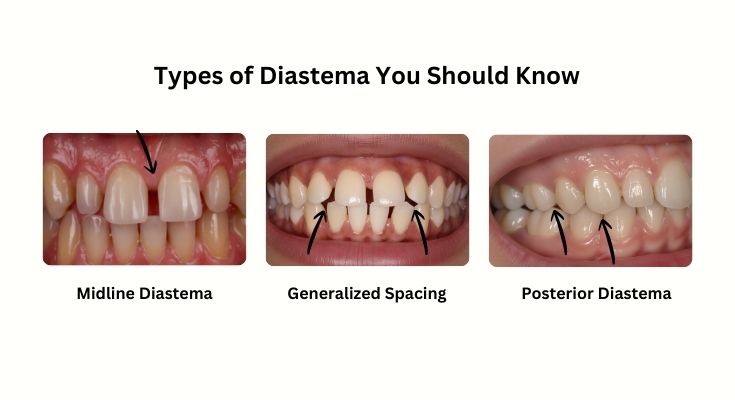
Types of Diastema You Should Know
Not all gaps between teeth are the same. Understanding the type of diastema you have can help you decide if it’s something to watch or something to fix.
Midline Diastema
The most well-known one is the gap between the two upper front teeth. It is the one that usually catches the eye when you smile. It is a distinctive characteristic that is enjoyed by some individuals and is closed by others.
Generalized Spacing
Gaps may be present more than once in your mouth. This is referred to as generalized spacing. It will cause your teeth to appear spaced out and it usually occurs when the teeth are smaller than the jaw.
Posterior Diastema
The gaps do not appear only in the front. The posterior diastema occurs between the side or back teeth. These holes are not so obvious when you are smiling but may at times influence the chewing process or complicate the maintenance of teeth cleanliness.
Temporary vs Persistent Diastema
There are temporary gaps that are particularly in children. The gaps can be closed naturally as the baby teeth fall out and the adult teeth grow in. Persistent diastema, however, remains into adulthood and might or might not require treatment as you wish or as your dentures dictate.
Knowing these kinds will make you realize that not every gap is an issue. Others are simply a natural extension of your smile and others may require the recommendation of a dentist to maintain your teeth healthy and straight.
Is Diastema Normal or a Dental Problem?
Anyone would stop to wonder whether there is something wrong by seeing a gap between teeth. The thing is that diastema may be quite normal, particularly in children.
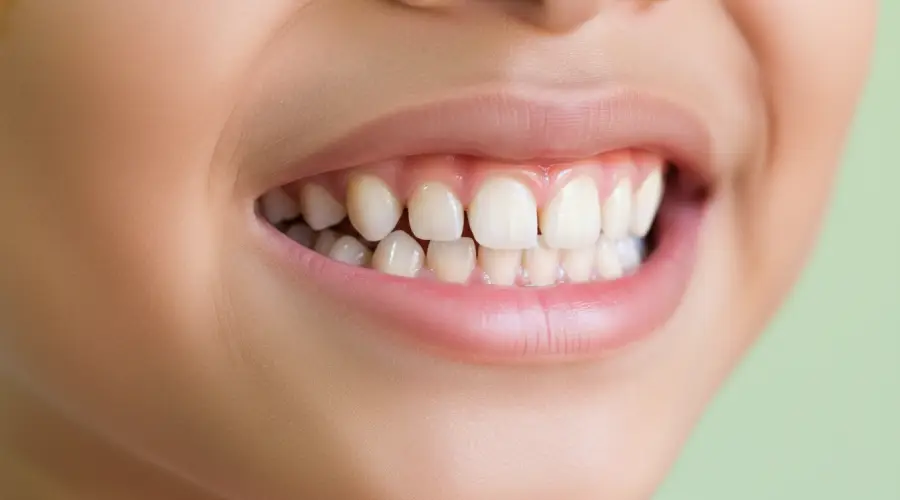
Gaps are very prevalent during the mixed dentition stage when the baby teeth are shedding and the adult teeth are developing. The jaws of children increase at a higher rate than the teeth and this creates gaps that automatically close as permanent teeth take their place. These childhood gaps, in most cases, reduce automatically without any intervention.
In the case of adults, it is slightly different. There are some gaps that are just due to the development of the teeth and jaw, these are typically not harmful and do not have an impact on the health of the mouth. They are even adopted by many people as a part of their unique smile.
However, there are times when a gap could be concerning. If it’s caused by gum disease, missing teeth, or a large frenum (the tissue connecting your lip to your gums), it could be a warning among common dental checkup signs that requires a dentist’s attention. Other red flags include widening gaps, loose teeth, or pain while chewing.
The key takeaway: not all gaps are a problem. Understanding the cause of your diastema is what matters most. With the right checkup, you can know if it’s just a charming quirk of your smile or something that deserves professional care.
What Causes Diastema?
Diastema or gaps between teeth may have numerous causes. Knowing how they develop makes you know whether it is harmless, temporary or something to consult a dentist. Let us deconstruct the most prevalent causes.
1. Genetics & Tooth - Jaw Size Mismatch
Sometimes, it’s just in your genes. If your jaw is slightly larger than your teeth, spaces can form naturally.
Example: Sarah always wondered why her teeth seemed “too small” for her smile, her mother had the same tiny gaps between teeth.
2. Enlarged or High Labial Frenum
The labial frenum is the little band of tissue connecting your upper lip to your gums. If it’s thicker or longer than usual, it can push your front teeth apart.
Example: Jake’s dentist noticed a strong frenum between his front teeth, which explained why braces alone hadn’t fully closed his gap.
3. Missing, Small, or Peg-Shaped Teeth
If a tooth is missing or smaller than normal, nearby teeth may shift, creating gaps. Peg-shaped teeth, teeth that are narrower or pointed, also leave spaces around them.
Example: Emma had a tiny upper lateral incisor, which left a noticeable space on both sides that bonding helped fill later.
4. Childhood Habits (Thumb Sucking, Tongue Thrusting)
Pressing the tongue against teeth while swallowing or sucking a thumb can slowly push teeth apart over time.
Example: Liam’s front teeth slowly drifted apart because he sucked his thumb past the age of seven, creating a midline gap.
5. Gum Disease & Bone Loss
Advanced gum disease can erode the bone that supports teeth, causing them to loosen and drift, often creating new gaps in adulthood without proper gum disease treatment.
Example: Maria noticed her teeth spreading slightly as gum inflammation worsened, her dentist treated the gum disease first to prevent further spacing.
6. Aging & Tooth Movement
Teeth naturally shift over time. Even if you had perfect alignment in your youth, small gaps can appear later in life due to natural wear, bone changes, or jaw movement.
Example: John’s front teeth slowly separated over the years, and while it didn’t hurt, he wanted to explore cosmetic options to restore his smile.
Understanding the cause of a diastema is key to deciding whether to leave it as is, monitor it, or seek treatment. Sometimes, a gap is just a charming quirk of your smile, other times, it signals that professional attention is needed.
How Dentists Diagnose Diastema (What Really Happens in the Chair)
Visiting a dentist to check a gap between your teeth is often simpler than it sounds, but each step matters more than you might think.

1. Visual Exam
The first thing your dentist does is look closely at your teeth and gums. They note the size, location, and number of gaps. This simple glance helps identify whether the gap is just cosmetic or linked to other dental issues.
2. Dental History
Your dentist will inquire about your dental history, habits, past treatment, and family history. Being aware of whether thumb-sucking, tongue-thrusting or genetics contributed to the gap makes them know why the gap exists.
3. X-Rays
X-rays reveal what’s beneath the surface, missing teeth, small teeth, bone density, or signs of gum disease. These hidden details can explain why gaps formed or if there’s a deeper issue to address.
4. Gum Evaluation
Healthy gums support healthy teeth. Your dentist will check for swelling, redness, or looseness that might indicate gum disease, which can cause or worsen gaps.
5. Bite & Spacing Analysis
Finally, they examine how your teeth come together when you bite and whether your bite is misaligned. This step ensures that treatment, if needed, addresses the cause, not just the gap itself.
By going through each of these steps, dentists can give you a clear picture of why the gap exists and whether it’s purely cosmetic or something that needs professional care.
Do You Need to Fix Diastema?
Not every gap between teeth needs fixing. The first step is understanding why the gap exists and what effect it has on your mouth.
When Treatment Is Not Necessary
If your diastema is small, stable, and not causing discomfort, it’s often fine to leave it alone. Many people keep their gaps as a natural feature of their smile. Children’s gaps that appear during the mixed dentition phase usually close on their own, so immediate treatment isn’t needed.
When Treatment Is Recommended
Treatment becomes important if the gap is caused by gum disease, missing teeth, or a large frenum. Widening gaps, pain, loose teeth, or bite problems also indicate a need for professional care.
Functional vs Cosmetic Reasons
Sometimes, treatment is purely cosmetic, such as choosing a smile makeover to achieve a more uniform smile. Other times, it’s functional: gaps that trap food, make cleaning difficult, or affect speech and chewing may need intervention.
Child vs Adult Considerations
In children, many gaps are temporary, and early habits or dental growth often resolve them naturally. Adults, however, may have persistent gaps that require orthodontics, bonding, or other solutions if they wish to close them.
Ultimately, deciding whether to fix a diastema comes down to understanding its cause, its effect on oral health, and your personal preference. A dentist can guide you to the safest, most effective choice.
Treatment Options for Diastema
If you’re considering closing a gap in your teeth, there are several effective options. The best choice depends on the cause of the gap, your age, and your personal goals. Let’s explore them one by one.
Orthodontic Treatment (Braces & Aligners)
Braces or clear aligners are the most reliable way to close gaps and maintain long-term stability. They gradually move teeth into place, correcting spacing issues naturally.
- Ideal for: Large gaps, multiple gaps, or misaligned teeth.
- Timeline: Usually 6 months to 2 years, depending on the complexity.
- Pros: Permanent solution, improves bite, durable.
- Cons: Requires patience, routine adjustments, and good oral hygiene.
Dental Bonding
Bonding is a quick, affordable cosmetic option. Your dentist applies a tooth-colored resin to fill the gap, shaping and polishing it for a natural look.
- Ideal for: Small gaps or single-tooth corrections.
- Timeline: Usually completed in one appointment.
- Pros: Fast, minimally invasive, cost-effective.
- Cons: Less durable than other treatments, may stain over time.
Veneers
Veneers are thin, custom-made shells that cover the front surface of teeth. They create an instantly uniform appearance.
- Ideal for: Cosmetic perfection, uneven teeth, or when bonding isn’t sufficient.
- Timeline: Usually 2–3 appointments over a few weeks.
- Pros: Immediate aesthetic improvement, long-lasting.
- Cons: Requires enamel removal, more expensive than bonding.
Frenectomy
A frenectomy removes or reshapes the tissue between your lip and gums if it’s causing the gap, and in some cases, it may be combined with tissue grafting to strengthen the area or improve healing.
- Ideal for: Gaps caused by an oversized labial frenum.
- Timing matters: Often combined with braces or bonding for best results.
- Pros: Corrects underlying cause, simple procedure.
- Cons: Rarely effective alone for closing the gap.
Tooth Replacement (Implants / Bridges)
When a gap is due to missing teeth, replacement is the solution. Dental implants or bridges restore function and appearance.
- Ideal for: Adult patients with missing teeth.
- Timeline: Bridges: 2-3 weeks; Implants: 3-6 months for healing.
- Pros: Permanent, restores chewing and aesthetics.
- Cons: Implants require surgery and healing time; bridges affect neighboring teeth.
Conclusion
A gap between teeth, or diastema, is more common than many people realize. For some, it’s simply a unique feature of their smile, while for others, it may hint at underlying dental causes. Understanding what creates these gaps, from genetics and childhood habits to gum health, helps you make informed choices about whether to treat them or embrace them.
If treatment is desired, options range from quick cosmetic fixes like bonding or veneers to more long-term solutions like braces, aligners, or tooth replacement. Procedures like frenectomy or tissue grafting may also be part of a comprehensive plan for certain cases.
Whether you choose to close the gap or keep it as part of your smile, the most important step is understanding the cause and consulting a dental professional. With the right guidance, you can ensure your teeth stay healthy, functional, and confident, gaps and all.
FAQs
1. Is diastema bad for your teeth?
Most of the time, a diastema is completely harmless. It doesn’t cause pain or dental problems if your teeth and gums are healthy. However, if the gap is caused by gum disease or missing teeth, it may require treatment to prevent further issues.
2. Can adults close a diastema?
Yes! Adults can close gaps with options like braces, clear aligners, dental bonding, veneers, or even dental implants if a tooth is missing. The right choice depends on the cause and size of the gap.
3. What’s the fastest way to fix a gap?
For quick results, dental bonding or veneers are the fastest cosmetic options. Bonding can often be done in a single appointment, while veneers may take a few weeks for preparation and placement.
4. Does diastema affect speech?
In most cases, a small gap does not affect speech. Larger gaps, especially between the front teeth, can occasionally cause slight whistling or pronunciation changes, which can improve after dental treatment.
5. Can it come back after treatment?
Some gaps can return if the underlying cause isn’t addressed. For example, untreated gum disease, habits like tongue thrusting, or missing teeth can make the gap reappear. Follow-up care and proper dental hygiene help keep your smile gap-free.

Dr. Alexander Heifitz (Author)
Dr. Alexander Heifitz is the founder of 65 Broadway Dental in NYC, where he combines advanced dental expertise with a patient-first approach. He specializes in cosmetic and restorative treatments such as dental implants, veneers, Invisalign, and smile makeovers, helping New Yorkers achieve both oral health and confidence.

Booking An Appointment
Looking for a reliable dentist in Downtown NYC? Whether you need a routine cleaning, urgent care, or a full smile transformation — we’ve got you covered. We accept most PPO insurance plans and offer flexible scheduling.
+1 (212) 430-3888
Call for appointment
Walk-ins Welcome / Same-Day Appointments Available