
Swollen or Inflamed Taste Buds on Tongue | Symptoms, Do’s & Don’ts


Have you ever experienced excruciating pain in your tongue or a distinct burning sensation? If you have, you’re familiar with what is called swollen or inflamed taste buds. It’s a temporary condition that most Americans experience at least once in their lives. Experts even estimate that 50% of people in the USA experience it at some point.
Taste buds are minute projections of the tongue that make contact with food chemicals. They turn these chemical signals into electronic signals that the brain understands.
If these simple bumps on your tongue don’t work, your sense of taste can be wrong. This blog explores the reasons for swollen taste buds, causes, dos and don’ts.
What are Taste Buds?
Taste buds are numerous small projections called papillae that are visible on the tongue’s surface. These small bumps help us detect a range of tastes and characteristics from edible items.
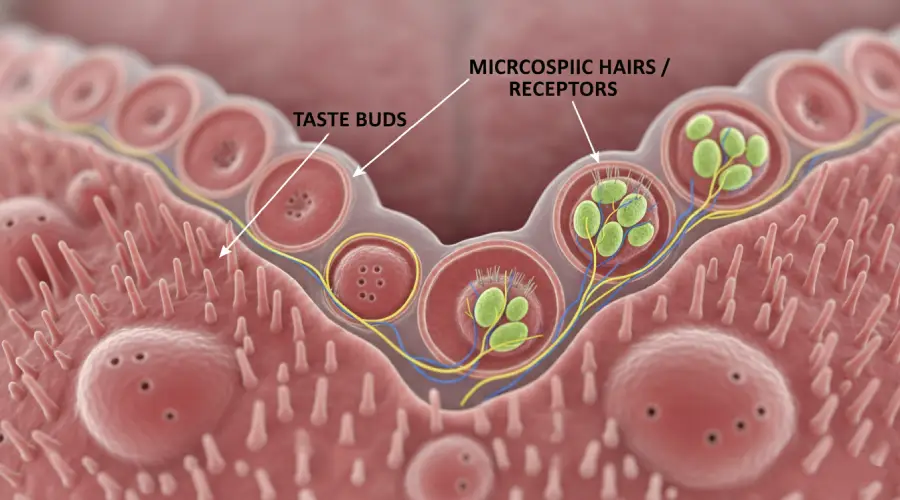
Each bump or papillae has sensitive yet microscopic hairs that can detect tastes and communicate them to the brain. These taste buds are present in large numbers, as an adult has at least 10,000.
Unfortunately, these are short-lived and are replaced every two weeks by new taste buds. However, during this short time, they may sustain damage or be injured.
Taste buds are responsible for helping us taste the following flavors:
- Sweet: This common flavor is easy to detect because these foods contain large amounts of natural or artificial sugar.
- Sour: Foods appear sour due to the high presence of acidic compounds, such as lemon or organic acids.
- Bitter: The bitter taste is mostly sensed in plant-based foods.
- Salty: A salty taste is found in food that has a lot of added salt or naturally occurring mineral salts such as Potassium and Magnesium.
- Savory: Also known as the “umami” taste, it’s found in broths and describes the flavor of glutamates, especially monosodium glutamate (MSG).
How do Taste Buds Helps Us Taste?
The taste buds use a stepwise procedure to ensure the person receives the complete taste.
Step 1: Breakdown of Food
Tasting starts with chewing! Without this process, food wouldn’t be broken down into simpler raw materials. By chewing, food is broken up and mixed with saliva.
This process encourages the release of chemical components, preparing it for the taste buds.
Step 2: Combining Chemicals and Taste Buds
The food-based chemicals are carried by saliva around the mouth to the tongue, where they find the taste pores. These taste pores act as an entrance to the taste buds, where they will perceive taste.
Step 3: Activation of Taste Receptors
Once the chemicals come into contact with microscopic taste bud hairs, the ‘taste receptor cells’ they are attached to become activated. Certain proteins on the microscopic hairs will attach to the chemical food components.
Step 4: Signal Transduction:
This exchange will alter the taste receptor cells. These cells will convert chemical signals into electrical signals.
Step 5: Neural Transmission
These electrical signals are transferred to the brain across the cranial nerves. If the nerves are damaged, it affects the transfer of these signals.
Step 6: Perceiving Flavors
When the electrical signals reach the brain, it interprets them into a taste. But these signals alone cannot determine the flavor of foods. The olfactory organs in the nose also contribute to taste.
Signals from both regions are used every time you eat or drink, ensuring you get the full taste experience.
What is a Swollen or Inflamed Taste Bud?
A swollen or inflamed taste bud occurs when a taste bud is irritated or inflamed. Thankfully, thousands of taste buds cover the tongue. Hence, it takes many inflamed or swollen buds to start feeling symptoms. But only one may be affected.
When these small sensory organs become swollen or inflamed, our sense of taste changes. The result is that your swollen taste buds are painful and sensitive, and you have difficulty eating or drinking.
The condition can heal on its own or with home remedies for inflamed taste buds within a few days.
If the symptoms don’t subside, it can denote a deeper underlying issue. Some of these underlying causes can include dry mouth, severe acid reflux, or an inappropriate diet.
What do Damaged Taste Buds Lool Like?
The damaged taste buds look very different from healthy taste buds. You can almost always distinguish damaged taste buds by these appearances:
- Bright red spots
- White spots
- Fluid-filled spots
- Slight swelling or puffiness
- Glossy appearance
- Peeling appearance
These signs are all proof that your tongue and taste buds are not functioning properly. Therefore, it’s normal for your taste to be off during this time. Probably, your sense of taste will only return once these inflamed taste buds have healed.
What are the Symptoms of Swollen Taste Buds?
If your taste buds are swollen, they’re obviously damaged and not working properly. As a result, the first symptom will be changes to your sense of taste.
Apart from the change of physical appearance, swollen taste buds can bring about the following symptoms:
- Pain, sensitivity, and a burning sensation
- The partial or complete loss of taste
- Foods that once tasted good are less appealing or even unpleasant
- Heightened senses towards hot and cold consumables
While most of these symptoms are temporary, they can last longer if your taste buds don’t heal. The key to making them go away sooner is to help make healing faster. This is possible by following the tips on what to do, which we’ll approach later.
How are Taste Buds Damaged?
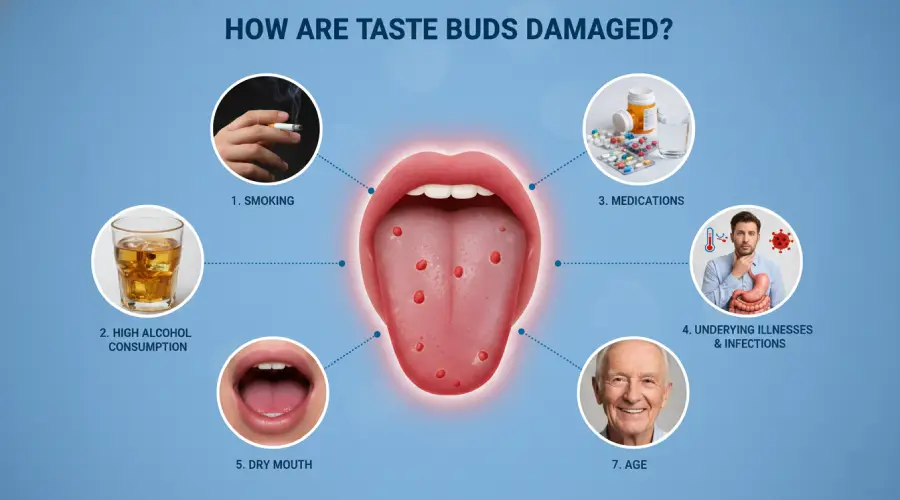
Taste buds can be damaged due to several reasons. A detailed look at what causes inflamed taste buds shows that it’s more common than you think.
It could include overeating the wrong foods, irritation from poorly fitting braces, smoking, dry mouth, chronic acid reflux, or allergies.
Why Does Food Taste Differently When Taste Buds Are Damaged?
When the taste buds are swollen or inflamed, it’s obvious they are damaged. When this happens, food doesn’t taste the way it usually does. This is why damaged taste buds compromise taste:
Weakened Signal Transmission
Taste buds work by sending electrical signals to the brain through the nerves. But when these cells undergo damage, a weak or incorrect signal is sent to the brain. This leads to a wrong perception of taste.
Damaged Taste Reception
If taste receptors aren’t operating well, they cannot identify tastes such as sweetness, sourness, saltiness, or bitterness. This leads to a subpar taste experience that’s unenjoyable.
Unpleasant Taste
Tongue and mouth Infections can damage the taste buds, leading to unpleasant or metallic tastes. This can also occur if taking medications that target the taste buds. It leaves them unable to fulfill their core function, transferring taste signals.
What Not to Do if You Have Swollen or Inflamed Taste Buds
When your taste buds are irritated, there are certain actions you must avoid. This list of six provides a guide to what you shouldn’t do when in this position.
1. Physical Contact
Touching the swollen taste buds with your fingers is a big no, as is using other objects. Attempting to pop or scrape off the affected area on the tongue won’t work either. In fact, trying this can very well make it worse.
2. Very Hot or Cold Foods or Drinks
Extremely hot or cold foods or beverages can worsen the inflammation and sensitivity. But even if it doesn’t, it increases the amount of pain you experience while eating.
Health care providers will automatically advise you to stop consuming very hot or very cold edibles and drinks.
You may have to temporarily pause your daily coffee or tea break or wait till it gets cooler. Also, cold drinks and sodas must be halted until the condition eases.
3. Spicy and Acidic Foods
Severely spicy or acidic foods can trigger the taste buds in a bad way! They cause an overload since the taste buds are already sensitive. When nursing swollen taste buds, spicy and acidic foods should be stopped.
Chilli sauce, dill pickles (and other pickles) are examples of foods that fall under this category.
4. Hard Edibles
Hard objects can naturally turn into weapons against a hurt tongue and damaged taste buds. Punctures from a hard object can increase swelling, cause bleeding, or cause lasting physical trauma.
Hard objects don’t just include hard candy; they also include crunchy things like your cereal, potato crisps (chips), and a range of other snacks. Even healthy foods like nuts and dried fruits can prove difficult to eat, so avoiding them is advisable.
5. Healing-Speed Reducing Habits
Particular habits, such as alcohol consumption and smoking, can reduce the speed of healing. Additionally, tobacco products can make the situation worse by irritating the taste buds with certain chemicals.
Avoiding these ensures a full and fast recovery of the papillae and restoration of their function.
6. Self-Diagnosis
Assuming what’s causing the irritated tongue papillae and treating it with over-the-counter medicines isn’t ideal.
In most cases, it heals on its own without needing any treatment. But individuals who seek treatment may make the situation worse. That’s why self-diagnosis and treatment aren’t always a good thing.
What to Do if You Have Swollen or Inflamed Taste Buds
When struggling with injured taste buds, there are steps you can take to support healing. These steps will help speed up healing and numb the sensations.
1. Saltwater Rinse
Salt and water have long been used to make a solution that soothes most short-term oral issues. The same solution can treat enlarged papillae.
The solution is simple to make. Mix a teaspoonful of salt into a glass of water. You can ease the irritation by swishing and holding the solution in your mouth.
2. Eat Soft Foods
You can’t fix swollen taste buds based on what you eat. However, it can make eating easier by relieving some pain and discomfort.
So, eating soft foods like mashed potatoes, oatmeal, pasta, or rice is easier. Steer clear of any hard items or crunchy foods, which can inflame your tongue.
3. Drink Lukewarm Drinks
If you’re nursing damaged taste buds, you will probably have to stop drinking piping hot beverages. This includes your morning cup of coffee or tea, or your glass of lemon and hot water.
This will be temporary till the condition improves. However, you can still drink these beverages if you can still enjoy them at a mild temperature.
4. Maintain Good Dental Hygiene
You should continue your dental hygiene practices even if your tongue papillae become swollen and inflamed.
In fact, dentists make it crystal clear that maintaining good dental hygiene practices is essential.
5. Keep Hydrated
A potential reason why taste buds become swollen or inflamed is dry mouth. Dry mouth can be caused by not drinking enough water, medications, or an autoimmune disease called Sjogren’s syndrome.
There are medications to manage chronic severe mouth, however, the best solution is to stay hydrated. Taking a few sips of water throughout the day is the best way to avoid dry mouth.
6. Avoid Contact & Irritation
Touching the affected area on your tongue is something you should avoid throughout the course of the condition. Instead, make conscious efforts to stay away from the area.
Be wary of certain habits or reflexes that may make the situation worse. Also, be sure to avoid any foods that could worsen the inflammation.
When Should I Seek Treatment for Swollen Taste Buds?
Swollen or inflamed taste buds are a condition that resolves on its own. However, there are instances when it doesn’t, which can cause concern, discomfort, an altered diet, and an impacted lifestyle.
Seeking professional healthcare attention is necessary when:
a) Healing is Absent
If the inflamed taste buds don’t appear to be healing, they could require professional attention. A slow reduction in physical symptoms and a lower degree of sensitivity are signs of healing.
If the affected area looks the same after days, it’s cause for concern.
b) It’s Been Too Long
Most cases of damaged taste buds resolve in days or a week, and at most two weeks. You will know it’s been too long when it’s been a week without any change.
There’s no point in assuming things will get better after two weeks. Instead, it’s better to get an expert’s opinion about the swollen papillae.
c) Advanced Symptoms
Professional attention is mandatory if the symptoms become serious. This includes severe swelling, bleeding lesions, persistent burning sensation, and loss of taste. A combination of these symptoms or the presence of just one is concerning.
Opting for a specialist consultation when experiencing severe symptoms is the smart decision. Seeking medical attention at the right time can stop the more severe symptoms from developing.
d) Disruption of Eating & Drinking Habits
When eating or drinking becomes unbearable, individuals must seek professional care. Altering your eating habits for too long due to pain can have side effects.
Mineral and vitamin deficiencies, overeating, or undereating may result from an improper diet. It can also make drinking your favorite beverage unpleasant!
Conclusion
While inflamed taste buds aren’t life-threatening, it’s an inconvenience most people hate. The pain and increased sensitivity to temperature can affect eating and drinking habits.
There isn’t an immediate treatment for it, but it will subside and heal within days or a week. In the meantime, warm saltwater rinses, avoiding certain drinks and foods, practicing good dental hygiene, and stopping smoking can accelerate healing.
FAQs
1. What foods irritate swollen taste buds?
Foods that irritate damaged taste buds include spicy, acidic, or sour foods.
2. What does an irritated taste bud feel like?
An irritated taste bud feels painful, tender, swollen, and is sensitive to taste and temperature.
3. What heals inflamed taste buds?
No precise treatment is available for swollen taste buds, as they are self-healing.
4. How long until the inflamed taste buds go away?
Although most cases are healed in a few days, the condition can persist for a week or two. Medical attention is advisable if the condition persists for more than two weeks.
5. How do you reduce swelling in taste buds?
The ideal way to reduce swelling of the taste buds is to eat mild foods, drink lukewarm beverages, avoid alcohol, stop smoking, and follow good dental hygiene practices.

Dr. Alexander Heifitz (Author)
Dr. Alexander Heifitz is the founder of 65 Broadway Dental in NYC, where he combines advanced dental expertise with a patient-first approach. He specializes in cosmetic and restorative treatments such as dental implants, veneers, Invisalign, and smile makeovers, helping New Yorkers achieve both oral health and confidence.

Booking An Appointment
Looking for a reliable dentist in Downtown NYC? Whether you need a routine cleaning, urgent care, or a full smile transformation — we’ve got you covered. We accept most PPO insurance plans and offer flexible scheduling.
+1 (212) 430-3888
Call for appointment
Walk-ins Welcome / Same-Day Appointments Available

Related Blogs
The Link Between Oral Health and Diabetes
Oral Health and Diabetes are closely linked. Poor diabetes control can cause gum disease, infections, and slow healing, impacting overall health.
Read More
Can Bad Oral Health Affect Your Brain?
Discover how poor oral health can impact your brain. Learn the surprising links between gum disease, memory, and overall cognitive health.
Read More