
The Complete Guide to Dental Crowns in 2026: Types, Costs, and What to Expect


Dental crowns are dental in nature, whereby they are used to preserve and replace damaged teeth. When a dentist has suggested that you have a crown, you might have questions about the varieties, costs, and procedure. The entire guide is a complete guide to understanding dental crowns in 2026, such as the choices you have in the U.S, pricing, and what to expect before, during, and after the surgery.
What Is a Dental Crown?
A dental crown is a tooth cover that encircles a weak or decayed tooth. In the United States, dentists apply crowns to preserve teeth, restore strength, and improve appearance. When in position, a crown becomes like a natural tooth. You can chew, talk, and even smile.
A tooth crown is usually prescribed when a tooth is too rotted to support a normal filling. This may occur because of huge cavities, cracks, fractured teeth, or post-root canal. The crowns are also worn to enhance the appearance of teeth that are malformed or are hypodontic or hypodontia.
A dental crown covers the entire visible portion of the tooth, unlike fillings, which only repair a portion of the tooth. This complete coverage will stop further destruction and will aid the tooth to survive longer.
Types of Dental Crowns Available in the U.S.
In the U.S., dentists provide various varieties of dental accessories. Both types have various advantages based on their power, looks, and price.
Porcelain and ceramic crowns are famous due to their close resemblance to natural teeth color. These are the crowns mostly used in the front teeth, where the appearance is of primary importance. They also go hand in hand with the teeth around them, and they give a natural smile.
Zirconia crowns have been associated with strength and durability. They are powerful enough to be used in the back teeth, and they still appear natural enough to be used in the front teeth. Zirconia is now widely used in the U.S. in traditional and same-day crowns.
Porcelain-fused-to-metal crowns are strong and presentable. Their bottom is made of metal, with porcelain on the outside. These crowns are long-lasting and can have a dark line around the gums in due course.
The metal crowns and gold are quite durable and suitable for molars. They are not so popular now because of the appearance issues, but it is still a good choice.
How Much Do Dental Crowns Cost in the U.S. in 2026?
The cost of dental crowns in the United States depends on the material, the experience of the dentist, and the location. A dental crown will cost an average of between 900 and 2500 dollars for each tooth.
The cost of porcelain and ceramic crowns does not exceed 1000 to 2000 dollars. The cost of zirconia crowns varies between 1200 and 2500 dollars. Metal crowns can be cheaper by a small margin, whereas high-beauty crowns are more expensive.
The bigger cities, such as New York, Los Angeles, and Chicago, have higher prices for dental crowns. Pricing is influenced by lab fees, technology, and overheads of offices.
Does Dental Insurance Cover Crowns?
In the U.S, dental crowns are partially covered by most dental insurance plans. Crowns are normally regarded as a significant procedure. The amount of coverage is usually 50 percent of the payment after the deductible.
A lot of plans have an annual cap, which usually lies between 1,000 and 2,000. In case your crown exceeds the limit, you pay the higher amount. Cosmetic crowns are not at all covered.
Never assume anything about your insurance benefits. Your dental office is able to assist you in knowing about your coverage and out-of-pocket expenses.
Types of Dental Crowns
In the United States, dentists can provide a number of dental crowns. The types are all produced out of various materials and are selected according to the location of the tooth in the mouth, the amount of pressure it will take care of, and how cosmetic expression is of concern to the patient. The knowledge of these choices will assist you and your dentist in the selection of the appropriate crown.
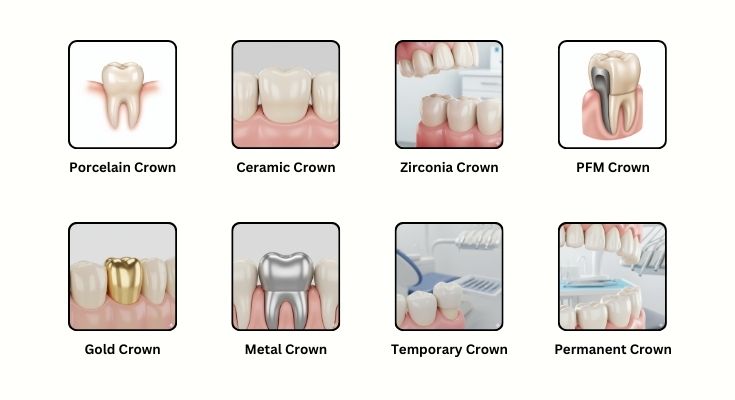
Porcelain and Ceramic Dental Crowns
The U.S. has a very high demand for porcelain and ceramic dental crowns, particularly for the front teeth. These crowns are tooth-coloured and are made to resemble the appearance of natural teeth highly. They match with the rest of the teeth and are commonly selected by individuals who are more concerned about looks.
All-ceramic or porcelain crowns are a safe option for patients with metal allergies, as they contain no metal, unlike some other types of crowns. They also reflect light in a natural manner, and as such, they are widely used as visible teeth. Nevertheless, porcelain and ceramic crowns can be weaker than metal-based crowns; hence are not always the best option to use in the case of back teeth that are used to grind heavy food.
Zirconia Dental Crowns
The most popular and the most advanced type of crowns that are used in the U.S. today are zirconia crowns. They are reputed to be very powerful and durable. Due to their strength, zirconia crowns are effective both in the front and back teeth.
The use of zirconia crowns in modern times also aims at appearing natural. Older ones were more opaque, whereas new materials can be matched in color. A large number of U.S. dental practices have adopted zirconia as a material to use in the same-day crown due to its ability to be manipulated and placed with the help of digital technology in a short period of time. Zirconia crowns are usually good when a patient grinds teeth or requires additional strength.
Porcelain-Fused-to-Metal (PFM) Crowns
PFM crowns (porcelain fused to metal crowns) are not a new product in the U.S. Such crowns are made of metal on the bottom to give them strength and porcelain on the outside to give them a tooth-like look. They provide a tradeoff between quality and appearance.
PFM crowns are normally applied in the back teeth, where the strength is a concern, yet the appearance is of concern. The porcelain layer can also degrade as time goes by, or the dark line might develop close to the gums, as the metal base is revealed. For this reason, most patients now prefer all-ceramic or zirconia crowns.
Gold and Metal Crowns
The dental crowns, which are the strongest and longest-lasting ones, are the gold and the metal crowns. They usually consist of alloys of gold or other metals. Such crowns are not easily chipped or broken, and they can cope with the chewing pressure.
In the U.S, metal crowns are commonly fitted on molars where they cannot easily be spotted. Although they are not tooth-colored, they need fewer teeth to be removed and can last for many years. Other patients have resorted to the use of gold crowns due to durability and reliability.
Temporary vs Permanent Crowns
While a permanent crown is being made, temporary crowns are placed. For a brief period, they shield the tooth and let you eat and speak normally. Usually composed of resin, temporary crowns are not intended to last very long.
Custom-made permanent crowns can be made of metal, zirconia, porcelain, or ceramic. They are made to fit your bite and, with the right maintenance, last for many years. A permanent crown is a long-term component of your smile once it is placed.
How Much Do Dental Crowns Cost in the U.S?
In the US, dental crowns can vary greatly in price. The price disparity between dental offices often surprises patients. The crown material, the dentist’s location, and whether or not dental insurance covers a portion of the treatment all affect the final cost. You can prepare ahead of time and prevent unforeseen expenses by being aware of these factors.
Average Dental Crown Cost by Material
Without insurance, a dental crown typically costs between $800 and $2,500 per tooth in the United States. In the middle of this spectrum are porcelain and ceramic crowns, which are frequently applied to front teeth. Because zirconia crowns are stronger and employ cutting-edge technology, their price may be higher.
The cost of porcelain-fused-to-metal crowns is frequently marginally lower than that of all-ceramic alternatives. Because metal is more expensive, gold or metal crowns can occasionally be more expensive, but they typically last longer. The overall cost will go up if more procedures, like a root canal or tooth buildup, are required.
Why Crown Prices Vary So Much
In the United States, there is no set price for dental crowns. Prices differ according to a number of significant factors. The material used for the crown is one important consideration. Generally speaking, stronger and more realistic-looking materials are more expensive.
The technology involved, the dental lab used, and the dentist’s experience all have an impact on the cost. Because of the equipment needed, offices that provide same-day crowns or digital scanning may charge more. Additionally, location is important because dental care is frequently more expensive in big cities. Although waiting periods and coverage limits differ by plan, insurance coverage can reduce out-of-pocket expenses.
Dental Crown Cost in Major U.S. Cities
In large American cities like New York, Los Angeles, and Chicago, dental crowns are typically more expensive. Price increases are a result of increased lab fees, staff expenses, and office rent. Crown costs may be lower in suburban or smaller cities, but materials and quality may still differ.
Financing and Payment Options
Many dental offices in the United States provide financing and payment plans because dental crowns can be costly. Instead of paying the entire amount up front, these options let patients spread the cost over time. While some offices offer internal payment plans, others collaborate with outside financing firms.
Does Dental Insurance Cover Crowns?
Dental insurance can help reduce the cost of dental crowns, but coverage depends on your plan. In the U.S., most insurance companies classify crowns as a major dental procedure, which affects how much of the cost is covered. Knowing your coverage helps plan for out-of-pocket expenses. Regular check-ups, like dental cleaning step-by-step, can also help prevent further tooth damage and maintain crown longevity.
How U.S. Dental Insurance Classifies Crowns
- Crowns are usually considered a major restorative procedure, not a basic procedure like fillings or cleanings.
- Cosmetic crowns (placed purely for appearance) may not be covered at all.
- Some plans have waiting periods before major procedure coverage begins. This could be several months after starting your insurance plan.
Typical Coverage Percentages
- Most U.S. dental insurance plans cover around 50% of the crown cost after your annual deductible.
- Example: A crown costing $1,500 → insurance pays $750, leaving $750 for you to pay.
- Coverage may vary depending on:
- Type of crown (porcelain, zirconia, PFM, etc.)
- Your insurance plan and network rules
- Type of crown (porcelain, zirconia, PFM, etc.)
- Always check your insurance policy to see what is included and what is excluded.
Out-of-Pocket Costs You Should Expect
Even with insurance, many patients pay part of the cost themselves. If neglected, decay may occur under a crown, which is explained in tooth decay under crown – black color. Typical out-of-pocket costs can include:
- Remaining crown cost after insurance coverage
- X-rays or imaging fees
- Tooth preparation and temporary crown placement
- Additional dental procedures are needed before crown placement
Tips to manage costs:
- Check with your dentist to see if they offer financing options or flexible payment plans.
- Spread the cost over several months instead of paying in full upfront.
- Confirm your coverage and deductibles before scheduling the procedure.
Same-Day Dental Crowns vs Traditional Crowns
Both conventional techniques and cutting-edge, contemporary technology can be used to place dental crowns. Although the procedure and timing are different, both options repair damaged teeth. Patients in the United States are better able to make decisions about their dental care when they are aware of these variations.
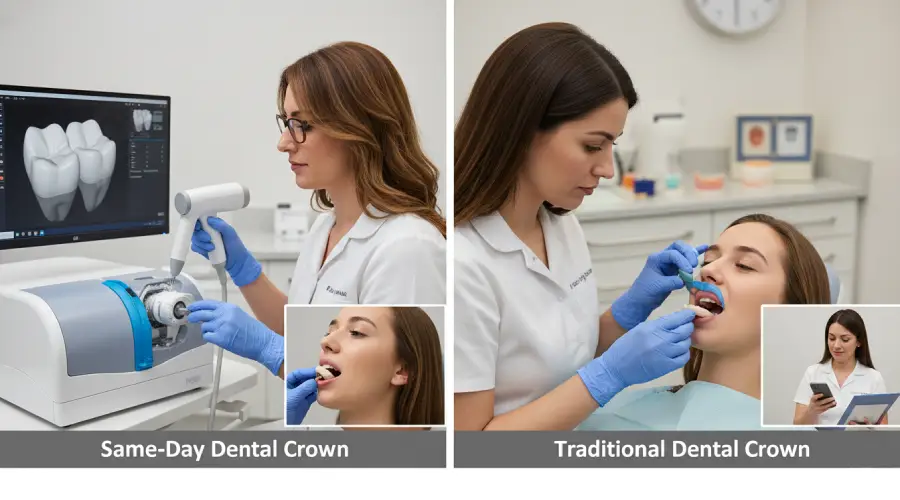
What Are Same-Day Dental Crowns?
Custom crowns that are created, manufactured, and installed in a single appointment are known as same-day dental crowns. You do not require a temporary crown while you wait for the permanent one, in contrast to traditional crowns. Strong, tooth-colored materials like zirconia or premium ceramic are frequently used to make these crowns. Same-day crowns are ideal for patients who want a fast and convenient option without multiple dental visits.
How CEREC Technology Works
In the United States, the most popular technique for same-day crowns is CEREC technology (Chairside Economical Restoration of Aesthetic Ceramics). A 3D digital scan of your tooth is the first step in the procedure. Your bite and tooth shape are then used by computer software to create an exact crown design. In the dentist’s office, a milling machine carves the crown from a solid block of zirconia or ceramic.
The crown is permanently cemented after the dentist examines the fit and makes any necessary minor adjustments. Compared to two to three weeks for traditional crowns, the entire procedure usually takes one to two hours.
Pros and Cons of One-Day Crowns
Same-day crowns have a number of benefits. Modern materials offer durability with a natural appearance, patients only need one dental appointment, and there is no temporary crown. Furthermore, there is a lower chance of problems like infection or breakage with temporary crowns.
However, not all dental offices provide this technology, and same-day crowns may be more expensive than conventional crowns. For the best fit or material selection, traditional lab-made crowns might still be necessary in some complex cases.
Dental Crown Procedure: Step-by-Step
In order to guarantee a perfect fit, appropriate function, and a natural appearance, getting a dental crown in the United States requires a number of steps. You can feel more at ease and prepared before your appointment if you are aware of the procedure.
Exam and Tooth Preparation
A comprehensive examination and assessment are the first steps in a dental crown procedure. To evaluate the condition of the tooth and the surrounding bone, your dentist will perform digital scans or X-rays. It might need to be treated first if there is deterioration or damage.
In order for the crown to fit snugly over the tooth, the dentist will shape it during this visit by removing a small amount of enamel. Since local anesthesia is typically used, the process is painless and comfortable. To make sure the crown fits your bite and lines up with nearby teeth, precise impressions or digital scans are then obtained.
Temporary Crown Phase
To protect the tooth while the permanent crown is being made, a temporary crown is placed after the tooth has been prepared. Temporary crowns, which are typically composed of acrylic or resin, enable you to speak, eat, and maintain tooth alignment without any problems.
Depending on whether your dentist uses digital same-day technology or a traditional lab, this phase could take a few days to several weeks. Keeping the area clean and avoiding extremely hard or sticky foods are important ways to take care of your temporary crown.
Final Crown Placement
When your permanent crown is ready, the dentist will take out the temporary crown and make sure it fits properly. For optimal bite alignment and comfort, the crown is adjusted as necessary. The dentist will permanently cement the crown in place after ensuring a precise fit. The crown now resembles a natural tooth in terms of appearance, feel, and functionality. The majority of patients experience an instant improvement in appearance and chewing.
Some dental offices provide same-day crowns using contemporary methods, where preparation, design, and placement are completed in a single visit. This removes the need for several visits and a temporary crown.
When Do You Need a Dental Crown?
Dental crowns are recommended when a tooth is damaged, weak, or needs protection. Knowing the signs that indicate a crown may be necessary can help you make informed decisions about your dental health.
Signs a Tooth Needs a Crown
- Cracked or Broken Tooth: Teeth with fractures or chips may need a crown to prevent further damage.
- Large Cavity: When a filling isn’t enough to restore a tooth, a crown provides strength and protection.
- After Root Canal Treatment: Teeth that have had a root canal often become brittle and require a crown. Maintaining your oral hygiene is crucial, as dental health affects overall health.
- Worn or Weak Tooth: Teeth that are worn down from grinding or general wear may benefit from a crown.
- Severely Discolored or Misshapen Tooth: Crowns can restore a natural appearance for cosmetic concerns. For a complete aesthetic upgrade, consider a smile makeover in NYC.
Crown vs Veneer vs Filling
- Filling: Repairs a small area of decay but does not cover the whole tooth.
- Veneer: A thin porcelain layer covering the front of a tooth, mostly for cosmetic purposes.
- Crown: It fits over the whole tooth to make it stronger, protect it, and improve how it looks.
Tip: If strength and long-term protection are priorities, a crown is usually the best choice.
Can a Crown Be Avoided?
- Minor cavities or small chips may be treated with fillings.
- Cosmetic concerns can sometimes be addressed with veneers or bonding.
- Early treatment of decay or damage may reduce the need for a crown.
Note: Avoiding a crown when it’s truly needed can lead to tooth fractures, further decay, or the need for more complex dental work later.
How Long Do Dental Crowns Last?
Dental crowns are designed to be long-lasting, but their lifespan depends on the material, placement, and how well they are cared for. Knowing what affects crown longevity can help you protect your investment and maintain a healthy smile.
Average Lifespan by Crown Type
- Metal and Gold Crowns: These are the most durable and can last 20 years or more with proper care.
- Porcelain-Fused-to-Metal (PFM) Crowns: Typically last 10–15 years, combining strength with a natural look.
- All-Ceramic or Porcelain Crowns: Usually last 10–15 years, favored for front teeth due to their natural appearance.
- Zirconia Crowns: Known for strength and aesthetics, they can last 15–20 years or longer.
Proper care, including brushing, flossing, and regular dental visits, can help crowns reach or even exceed their expected lifespan.
What Shortens Crown Life
Several factors can reduce how long a crown lasts, including:
- Poor Oral Hygiene: Plaque buildup around the crown can cause decay at the tooth margin.
- Teeth Grinding or Clenching (Bruxism): Can chip or crack a crown.
- Chewing Hard Foods or Objects: Ice, hard candy, or pens can damage the crown.
- Accidents or Trauma: Injuries to the mouth may loosen or break a crown.
When a Crown Needs Replacement
Some common signs that a dental crown may need to be replaced are:
- Persistent pain or sensitivity around the crowned tooth
- Visible cracks, chips, or wear on the crown
- Looseness or movement of the crown
- Recurrent decay at the margin of the tooth
Caring for Your Dental Crown
For your dental crown to last as long as possible, proper maintenance is necessary. Crowns are robust and long-lasting, but they are not unbreakable. Maintaining a healthy smile and protecting your crown can be accomplished with simple daily routines.
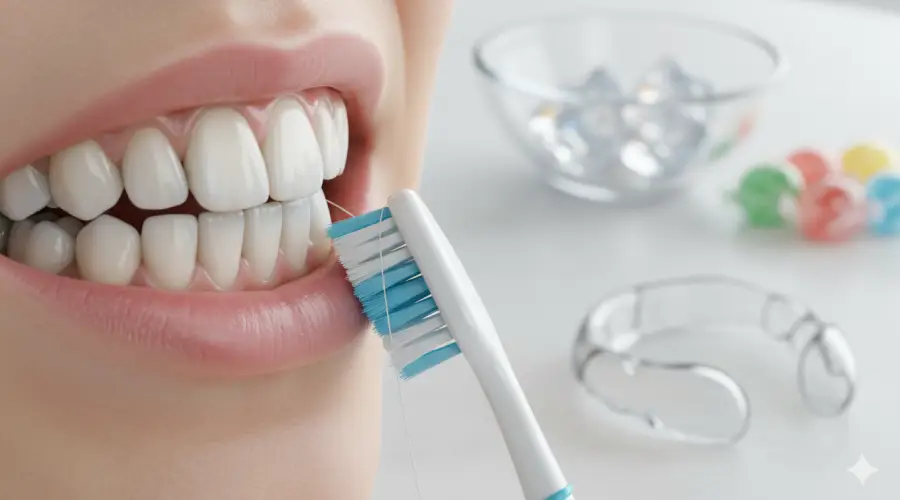
Daily Care Tips
Brushing and flossing are just as important with a crown as with natural teeth. Brush at least twice a day using a soft-bristled toothbrush and non-abrasive toothpaste. Floss carefully around the crown to remove plaque and prevent decay at the gum line. You may need a new dental crown if you notice any of these signs:
Foods to Avoid
Certain foods can damage a dental crown if eaten frequently or with force. Do not bite on hard items such as ice, hard candy, or pens. Chewy foods, sticky candies, and foods that require excessive pressure can also loosen or wear down the crown over time. Eating a balanced diet and cutting food into smaller pieces can help protect both your crown and natural teeth.
Night Guards and Grinding
If you grind or clench your teeth at night (bruxism), your crown may wear down or become damaged. Using a custom night guard can protect your crown from excessive pressure while sleeping. Your dentist can fit you with a night guard designed to reduce wear and prevent cracks or loosening of the crown.
Conclusion
Dental crowns are a reliable and effective solution for protecting and restoring damaged teeth. Whether you need a crown for strength, appearance, or after a root canal, understanding the types, costs, procedures, and proper care can help you make informed decisions. With options like porcelain, ceramic, zirconia, or metal crowns, and advancements such as same-day CEREC technology, patients in the U.S. have access to durable, natural-looking solutions.
Proper daily care, avoiding hard or sticky foods, and protecting against teeth grinding can extend the life of your crown and keep your smile healthy. By knowing what to expect and following your dentist’s guidance, you can enjoy a long-lasting, functional, and attractive dental crown for years to come.
FAQs
Q1. Which type of dental crown is best?
The best crown depends on your needs. Zirconia is strong and durable, porcelain/ceramic looks natural, and gold/metal crowns last the longest. Your dentist can help choose the right one.
Q2. What are the different types of crowns?
Common types are porcelain, ceramic, zirconia, porcelain-fused-to-metal (PFM), gold or metal, and temporary crowns. Each has different strengths, appearances, and costs.
Q3. Which is better, a zirconia or a ceramic crown?
Zirconia is stronger and ideal for back teeth, while ceramic/porcelain offers the most natural look, perfect for front teeth.
Q4. What is the main disadvantage of zirconia?
Zirconia crowns can be more expensive and may be less translucent than porcelain, making them slightly less natural-looking for front teeth.
Q5. Can you eat normally with zirconia crowns?
Yes. Zirconia crowns are very strong and allow normal eating, but avoid extremely hard or sticky foods to prevent damage.
Q6. Which crown is costly?
Zirconia and all-ceramic crowns are usually the most expensive due to material quality and aesthetics. Gold crowns can also be costly, depending on metal prices.
Q7. Which crown is best after RCT?
Zirconia or porcelain-fused-to-metal (PFM) crowns are often recommended after root canal treatment to protect the tooth and restore strength.
Q8. Which dental crowns last the longest?
Metal and gold crowns typically last the longest, often 20+ years, followed by zirconia crowns with proper care.
Q9. What is the safest tooth crown?
Porcelain, ceramic, and zirconia crowns are considered safe, biocompatible, and suitable for patients with metal allergies.
Q10. How long after a root canal for a crown?
A crown is usually placed 1–3 weeks after a root canal, depending on healing and whether a temporary crown is used.

Dr. Alexander Heifitz (Author)
Dr. Alexander Heifitz is the founder of 65 Broadway Dental in NYC, where he combines advanced dental expertise with a patient-first approach. He specializes in cosmetic and restorative treatments such as dental implants, veneers, Invisalign, and smile makeovers, helping New Yorkers achieve both oral health and confidence.

Booking An Appointment
Looking for a reliable dentist in Downtown NYC? Whether you need a routine cleaning, urgent care, or a full smile transformation — we’ve got you covered. We accept most PPO insurance plans and offer flexible scheduling.
+1 (212) 430-3888
Call for appointment
Walk-ins Welcome / Same-Day Appointments Available

Related Blogs

How Much Do Dental Crowns Cost in NYC? (2026 Price Guide)
How Much Do Dental Crowns Cost in NYC? 2026 Price Guide, Insurance Coverage, Types of Crowns, and What Affects the Final Cost
Read More
The Complete Guide to Dental Crowns in 2026: Types, Costs, and What to Expect
Learn about dental crowns in 2026, including types, costs, procedures, insurance coverage, care tips, and what to expect before treatment.
Read More