 Skip to content
What Is Hyperdontia? Understanding Extra Teeth, Causes, and Treatments


Have you ever noticed an extra tooth in the mouth that doesn’t seem to belong? Or wondered why some children appear to have more teeth than expected for their age? This condition is called hyperdontia, which simply means having more teeth than normal.
While it might sound unusual, hyperdontia is a dental condition that is usually not dangerous. Understanding what it is, why it happens, and how it can be managed will help you maintain a healthy smile.
In this article, we explain what is hyperdontia, the types of extra teeth, common causes, symptoms, treatment options, and tips for living with this condition.
What Is Hyperdontia?
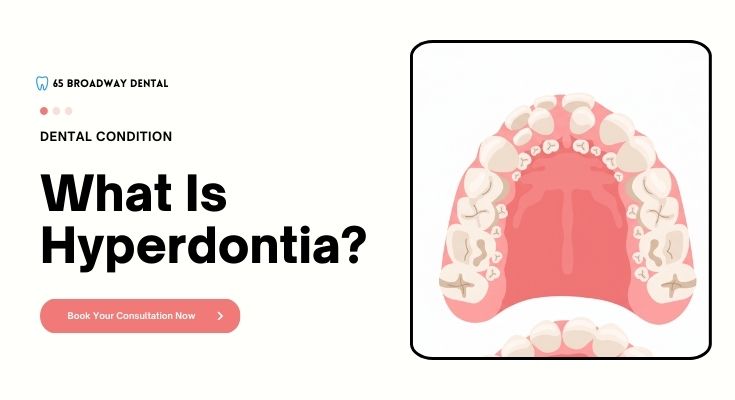
Hyperdontia is a dental condition that is associated with an individual having more teeth than usual. Adults are often provided with 32 permanent teeth, and the children are often provided with 20 primary teeth. The individual is diagnosed with hyperdontia, in case the individual has additional teeth.
Extra teeth may grow in the upper jaw, the lower jaw or both. They can grow either individually or in clusters, and may either come out distinctly, or remain hid in the gums. The rare condition occurs between 1 and 3 percent of the population and it is a little more prevalent among men compared to women.
Types of Hyperdontia (Extra Teeth)
Supernumerary teeth, also known as extra teeth, may be located in various locations in the mouth and may also be of various shapes. Their location and appearance allow dentists to determine whether they require treatment and how to deal with them. We will simplify it down.
By Location:
- Mesiodens
Mesiodens are the most common type of extra teeth. They usually grow between the two upper front teeth, right in the middle of your smile. Sometimes they are very small and barely noticeable, but other times they can push the front teeth out of place. In children, mesiodens can affect how the front teeth come in, and in adults, they may cause crowding or misalignment. - Paramolars
Paramolars grow next to your molars, either toward your cheek or tongue. These extra teeth usually appear in the back of your mouth. Because of their location, they can make chewing a little uncomfortable or create small gaps where food can get stuck. Most of the time, paramolars are small and may not be noticed until a dentist checks your teeth or takes an X-ray. - Distomolars
Distomolars, sometimes called “fourth molars,” grow behind your last molars. These are the farthest back teeth in the mouth and can sometimes stay hidden under the gums. Even if they don’t come out fully, distomolars can cause pressure on other teeth, leading to discomfort or misalignment. Dentists often recommend monitoring these teeth with X-rays to see if they need to be removed.
By Shape:
- Conical Teeth
Conical teeth are small and pointy, shaped like a cone. They often appear between regular teeth and are usually easy for a dentist to remove if needed. Despite being small, they can sometimes push nearby teeth and cause minor crowding. - Supplemental Teeth
Supplemental teeth are extra teeth that look just like normal teeth. They can blend in with your other teeth, but sometimes having an extra tooth can cause overcrowding or affect how your bite fits together. - Tuberculate Teeth
Tuberculate teeth are barrel-shaped and often don’t come all the way out. They may stay partially under the gums and sometimes push other teeth out of alignment. These teeth usually require careful monitoring by a dentist. - Odontoma
Odontomas are a little different. They are small lumps or masses made of tooth-like material. They are not cancerous and usually don’t cause pain, but if they grow large enough, they can affect nearby teeth or prevent normal teeth from coming in properly. Dentists may remove them to avoid future problems.
Extra teeth can pop up in all sorts of places and shapes, which is why dentists often rely on X-rays to get a clear picture of what’s going on in your mouth. Not every extra tooth requires treatment, but understanding its type and location can help determine if it should be removed or just monitored.
What Causes Hyperdontia?
The exact reason why some people develop extra teeth isn’t completely understood, but dentists and researchers have identified several factors that can play a role. Understanding these causes can help you or your child get proper dental care early and avoid potential problems.
1. Genetics
Extra teeth often run in families. If a parent or sibling has had hyperdontia, there’s a higher chance that other family members might develop extra teeth too. This suggests that certain genes influence how teeth grow, leading to the formation of extra ones in some people.
2. Overactive Tooth-Forming Tissue
Teeth develop from a special tissue in the gums called the dental lamina. Sometimes this tissue becomes overactive and produces more tooth buds than normal. These extra buds eventually grow into additional teeth, causing hyperdontia.
3. Ancestral Traits
Some researchers believe that extra teeth might be a leftover trait from our ancestors. Early humans may have needed more teeth to chew raw nuts, roots, and tough plant foods. Over time, most people evolved to have fewer teeth, but in some cases, these “extra teeth genes” can still appear.
4. Medical Conditions or Syndromes
Certain health conditions make extra teeth more likely, including Cleidocranial Dysplasia, Gardner Syndrome, Down Syndrome, and Cleft Lip or Palate, which can all influence overall dental health and its effect on your well-being.
- Cleidocranial Dysplasia: A rare condition affecting bones and teeth development.
- Gardner Syndrome: A genetic disorder that can cause extra teeth along with other growths in the body.
- Down Syndrome: People with Down syndrome may sometimes develop additional teeth.
- Cleft Lip or Palate: Children born with a cleft may have extra teeth along the affected area.
Being aware of these conditions helps dentists and families monitor tooth growth closely and take action if extra teeth cause problems.
Symptoms of Hyperdontia
Extra teeth, also called supernumerary teeth, can show up differently in each person. Some people may not even realize they have them, especially if the teeth are hidden under the gums. Others might notice changes or feel discomfort. Here’s what to look for:
1. Visible or Partially Erupted Extra Teeth
In some cases, extra teeth grow out through the gums and are easy to see. Sometimes, they only come out partially, appearing as small bumps or uneven teeth in the mouth.
2. Crowding or Misaligned Teeth
Extra teeth can push your regular teeth out of place, leading to crowding, overlapping, or crooked teeth. This may make your smile look uneven and can sometimes affect your bite.
3. Pressure or Discomfort in the Jaw or Gums
Extra teeth can create pressure in your jaw or gums, especially if they are trying to grow in a crowded space. This pressure can cause mild discomfort, tenderness, or swelling in some areas.
4. Difficulty Chewing or Brushing
Crowded teeth caused by extra teeth can make chewing food or cleaning your teeth properly more challenging. Food may get stuck in hard-to-reach areas, increasing the risk of cavities or gum problems. Learn more about preventing dental problems to keep your smile healthy.
5. Rare Complications: Cysts or Infections
In rare cases, extra teeth that are hidden or impacted under the gums may cause cysts or minor infections, similar to issues like swollen or inflamed taste buds that can also signal underlying oral problems.
Possible Problems Caused by Extra Teeth
Although having extra teeth (hyperdontia) is usually not dangerous, leaving them untreated can sometimes cause problems. Here are the main issues to watch out for:
- Blocked Teeth (Tooth Impaction):
- Extra teeth can stop normal teeth from coming in fully.
- May push other teeth out of place or delay eruption.
- Crowding and Crooked Teeth:
- Extra teeth take up space, leading to overcrowding.
- Can result in misaligned teeth or bite problems.
- Hard-to-Clean Areas:
- Crowding creates tight spots where brushing and flossing is difficult.
- Increases the chance of cavities and gum disease.
- Rare Growths (Cysts):
- Impacted extra teeth can sometimes form noncancerous cysts.
- These growths can affect nearby teeth and jawbone if untreated.
- Why Regular Checkups Matter:
- Dentists can spot hidden extra teeth early.
- Early monitoring or treatment can prevent more serious dental issues.
How Is Hyperdontia Diagnosed?
Early detection of additional teeth helps to avoid the issue of crowding, misalignment or jaw pains. The dentists normally begin by administering a standard dental check up. They are also able to observe additional teeth usually erupted or can be able to notice that there are teeth which are crowded, uneven or have an irregular spacing during these checkups.
In case the additional teeth are concealed beneath the gums, the dentists use X-rays. These photos can show the locality and quantity of additional teeth and this enables the dentist know how they can influence the adjacent teeth. A 3D scan (CT scan) could be employed in more complex cases. This gives a close-up view of the teeth and jaw structure hence the ease in planning treatment to teeth which could not be seen effectively through normal X-rays.
Diagnosing early is important as it enables the dentists to be alert of additional teeth before they become problematic. Early management of hyperdontia may help avoid pain, overcrowding, bite problems, and other complications, which may simplify treatment in the long perspective and make it more efficient.
Treatment Options
Not everyone with extra teeth needs treatment. Dentists usually recommend action when extra teeth cause pain, make chewing difficult, crowd other teeth, or make cleaning hard.
Tooth Extraction
Removing extra teeth is the most common treatment. Extraction is suggested when extra teeth push nearby teeth out of place, cause discomfort, or interfere with oral hygiene. This helps prevent future dental problems like dental cleaning and improves alignment.
Orthodontic Correction
If extra teeth have caused crowding or crooked teeth, braces or clear aligners may be used. This ensures teeth are straight, the bite is correct, and chewing works properly. You can also explore smile makeover options to enhance your overall smile aesthetics.
Pain Relief
For mild discomfort, over-the-counter medicines like ibuprofen or acetaminophen can help temporarily.
Monitoring
If extra teeth aren’t causing any problems, dentists may monitor them with regular checkups and X-rays. This way, any future issues can be addressed early.
Can Hyperdontia Be Prevented?
Hyperdontia cannot be prevented at the moment. Extra teeth occur primarily due to genetics or the development of the teeth in the mouth and they are something that you cannot do anything about.
Although you cannot prevent the formation of additional teeth, early diagnosis and frequent dental examinations can help a lot. Dentists are able to identify additional teeth at an early stage and keep track of them to avoid issues such as crowding, misalignment or inability to clean them.
With regular dental care, you will be able to minimize the chances of complications and ensure that any additional teeth are managed safely and efficiently.
Conclusion
Hyperdontia, or having extra teeth, is a dental condition that affects both children and adults. While it is relatively uncommon, extra teeth can sometimes cause problems such as crowding, misalignment, discomfort, or difficulty cleaning your teeth.
The exact cause of hyperdontia isn’t fully understood, but genetics, overactive tooth-forming tissue, ancestral traits, and certain medical conditions can all play a role. Extra teeth can be different in location and shape, and their effects on your mouth vary from person to person.
Not everyone needs treatment, but options like tooth extraction, orthodontic correction, pain relief, or monitoring can help manage the condition when necessary. Early detection through regular dental checkups is key to preventing complications and keeping your teeth healthy.
While hyperdontia cannot be prevented, proper dental care, observation, and timely treatment ensure that extra teeth do not interfere with your smile, comfort, or oral health. With the right guidance from your dentist, you can maintain a healthy, confident smile even with extra teeth.
FAQs
1. Can hyperdontia cause pain?
Yes, extra teeth may create pressure or discomfort in the jaw or gums, especially if crowded or impacted.
2. How common is hyperdontia?
It is relatively rare, affecting about 1–3% of people, and occurs slightly more in men than women.
3. Do extra teeth always need removal?
No. Only extra teeth that interfere with normal dental function, hygiene, or appearance typically require extraction.
4. Can children develop normally with extra teeth?
Yes. With proper monitoring and occasional orthodontic care, children with hyperdontia can grow with healthy oral development.

Dr. Alexander Heifitz (Author)
Dr. Alexander Heifitz is the founder of 65 Broadway Dental in NYC, where he combines advanced dental expertise with a patient-first approach. He specializes in cosmetic and restorative treatments such as dental implants, veneers, Invisalign, and smile makeovers, helping New Yorkers achieve both oral health and confidence.

Booking An Appointment
Looking for a reliable dentist in Downtown NYC? Whether you need a routine cleaning, urgent care, or a full smile transformation — we’ve got you covered. We accept most PPO insurance plans and offer flexible scheduling.
+1 (212) 430-3888
Call for appointment
Walk-ins Welcome / Same-Day Appointments Available

Related Blogs
What Is Hyperdontia? Understanding Extra Teeth, Causes, and Treatments
Learn about Hyperdontia, a condition causing extra teeth, its causes, symptoms, and treatments to maintain a healthy, confident smile.
Read More
What Is a Coronectomy? A Complete Guide to This Wisdom Tooth-Saving Procedure
Discover what a coronectomy is, a safe wisdom tooth procedure that removes the crown while preserving the roots, protecting nerves and jaw health.
Read More