
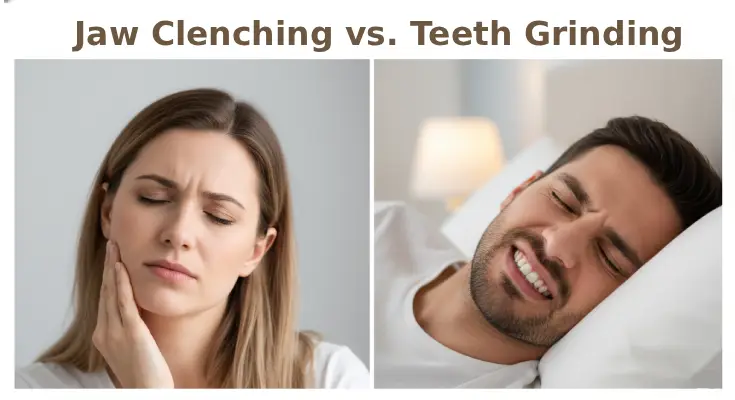
Jaw Clenching vs. Teeth Grinding: What’s the Difference?


Did you ever wake up with a sore jaw or a headache and ask yourself; Did I grind my teeth when I was asleep… or was I just clenching? You’re not alone. These two habits are frequently confused with each other, which are jaw clenching and teeth grinding, and they are rather dissimilar. And knowing the difference will be of great relief (and expensive dental work).
This guide will deconstruct the causes, differences, symptoms, and treatment.
What Is Jaw Clenching?
Jaw clenching occurs when you pinch the top and bottom of your teeth, and the teeth move slightly. Imagine that you are holding a stress ball in your jaws, tight and unmoving, and you can hardly feel it.
When most people are stressed or thinking of something, or even when they are focused on something not interesting, such as filling out forms, they end up clenching. It is not very obvious, however, with time, it may cause jaw pains, headaches, or even lead to the discomfort of the TMJ.
When you find yourself in a traffic jam, and you are clenching your teeth, or when you are about to meet a deadline and you find your jaws tightening, then it is most likely that you are subconsciously clenching your teeth. You’d be surprised how common this actually is.
What Is Teeth Grinding?
Today, however, the grinding of teeth, or bruxism, is a step more spectacular. This is when your teeth drag or rub against each other aggressively, usually when you are asleep at night. Contrary to clenching, grinding is habitual and most of the time does not noticeably manifest itself until the damage sets in: worn-down enamel, chipped teeth, or even tooth sensitivity.
The following is a little fun fact: at times, your partner is the one who notices your nocturnal grind. It could not be given away in anything like a 3 a.m. teeth-on-teeth symphony.
Clenching vs. Grinding: Spotting the Difference
Feature / Aspect | Jaw Clenching | Teeth Grinding (Bruxism) |
Definition | Holding the top and bottom teeth tightly together without much movement. | Sliding or rubbing teeth back and forth forcefully, often during sleep. |
Timing | Mostly during the day, often linked to stress or concentration. | Often at night during sleep, but it can also occur while awake. |
Muscle Activity | Static pressure in jaw muscles. | Repetitive, dynamic motion of jaw muscles. |
Symptoms | Jaw stiffness, tension headaches, TMJ pain. | Worn or chipped teeth, tooth sensitivity, morning jaw soreness, and headaches. |
Causes / Triggers | Daytime stress, anxiety, concentration, and emotional tension. | Sleep disorders, stress, caffeine/alcohol, medications, and misaligned bite. |
Damage to Teeth | Minimal visible damage; mainly muscle fatigue. | Visible enamel wear, chipped or flattened teeth. |
Treatment / Management | Stress management, jaw exercises, awareness, and lifestyle changes. | Nightguards, dental adjustments, stress reduction, and sleep disorder treatment. |
Advanced Solutions | Behavior therapy for daytime clenching, sometimes Botox for severe cases. | In addition to clenching treatments, some cases may require orthodontic care or bite adjustments. |
Long-Term Impact | Jaw discomfort, tension headaches, and potential TMJ problems. | Tooth damage, jaw pain, TMJ disorders, and possible need for cosmetic repair. |
Causes: Why We Clench or Grind
Both the habits of jaw clenching and teeth grinding have many common triggers, but more so, certain distinctions can be pointed out. Knowing them can assist you in identifying what is wrong with your jaw and then doing something to control it before it leads to additional dental issues.
Stress & Anxiety
This is likely to be the most widespread offender. When you are pressured, be it an imminent deadline to complete a task at work, a tense discussion with a loved one, or even watching a series full of suspense, your jaw will tighten unwittingly. Imagine it is the hold it together reflex of your body. Until the end of the day, when a person finds a sore head or a sore jaw, they do not realize they are doing it.
The stress may become chronic, and clenching teeth becomes a habitual process; that is why stress coping methods such as mindfulness, meditation, or even a brisk walk are surprisingly efficient.
Sleep Disorders
The problem of grinding is frequently associated with sleep problems, such as sleep disorders, broken patterns of sleep, or sleep apnea. When you jump or get startled out of a deep sleep, the muscles of the jaw will automatically tense or grind your teeth.
Some individuals have found out only after being told by a partner that they are grinding their teeth, or by their dentist that their teeth have been worn out in a strange manner. Nighttime grinding can be dramatically decreased by treating underlying sleep problems, such as applying a CPAP machine for sleep apnea.
Lifestyle Habits
The way you live your life is more important than you may think. Too much caffeine, alcohol, or smoking may all result in jaw tension, accelerating the intensity of both clenching and grinding.
Even seemingly simple habits, such as chewing gum too often or crunching ice, will overuse your jaw muscles and make the situation worse. The third cup of coffee in the afternoon? Yep, it may be stressing your jaw to a mini stress ball without your knowledge.
Medications
Some drugs, especially some antidepressants and stimulants, may include bruxism as one of the side effects. It is not very frequent, but it should be remembered in case one begins to experience new jaw aches or tooth erosion when taking a prescription.
Never change anything on your medicine without first discussing it with your doctor; the knowledge of this connection will make otherwise inexplicable symptoms understandable.
Signs and Symptoms: How to Know What’s Happening
Here’s how your body tells you it’s got a problem:
Clenching
- Jaw stiffness or soreness
- Tension headaches
- TMJ pain
Grinding
- Worn or chipped teeth
- Tooth sensitivity
- Morning jaw soreness
- Headaches
See the difference? Clenching leaves muscle strain, and grinding leaves visible damage to teeth. And if you notice any of these signs, it’s worth getting a dental checkup, even a little wear can snowball into bigger problems.
Treatment: Fixing Jaw Clenching vs. Teeth Grinding
The good news? Both conditions can be managed, sometimes with simple tweaks.

Lifestyle & Stress Management
- Mindfulness, meditation, or yoga
- Reducing caffeine or alcohol intake
- Good sleep hygiene
Dental Solutions
- Nightguards or custom mouthguards protect your teeth
- Occlusal adjustments or orthodontics if your bite is misaligned
Advanced Options
- Behavior therapy for daytime clenching
- Muscle relaxants or Botox in severe cases
Some patients find relief from jaw exercises and massage alone; it’s about finding what works for you.
You might be wondering if seeing a professional is really necessary. Consider this: untreated grinding or clenching can lead to chipped teeth, TMJ problems, and even headaches. A little proactive care now can save a ton later. And if cosmetic impact is a concern, cosmetic dentistry appointments can help restore worn or damaged teeth.
Prevention Tips: Keeping Your Jaw Happy
Here are a few simple ways to stop or reduce these habits:
- Awareness: Notice when you clench during the day
- Jaw exercises: Stretch and relax those muscles
- Avoid chewing gum excessively; it tires your jaw
- Stress management: Your body and mind are connected, honestly
Want a fuller guide on preventive dental care? Check out prevent dental problems for step-by-step tips.
When to See a Dentist
You should schedule a professional checkup if you notice:
- Chronic jaw pain or soreness
- Visible tooth wear or chipping
- Regular headaches
- Clicking or popping in the jaw
Even if it seems minor, early intervention is better. And if you’re worried about tooth wear affecting your smile, a smile makeover in NYC can address both function and aesthetics.
Care at 65 Broadway Dental
At our dental office, we focus on keeping your jaw and teeth healthy and pain-free. We carefully identify if you’re clenching or grinding, then create a plan that fits your lifestyle, reduces stress, and protects your teeth. Our gentle, personalized approach helps you feel comfortable and confident in your smile every day.
Conclusion
Clenching and grinding may be viewed as minor habits, but they may lead to actual issues when disregarded. The main takeaway:
- Clenching = daytime, pressure of the jaw, stress-driven.
- Grinding = movement of the teeth, usually sleep-related, wear enamel.
The two are treated by controlling stress, changing lifestyle, and occasionally dental care. Being a little bit aware helps a lot, and your jaw (and teeth) will reward you.
Then the next time you see that your jaw is sore, or your tooth is chipped, you will know whether it is jaw clenching or teeth grinding, and what to do.
FAQs
1. What is the difference between jaw clenching and teeth grinding?
Jaw clenching- It is the tightening of your teeth together without a lot of movement, usually in the daytime. Teeth grinding or bruxism is the movement of your teeth past one another or rubbing against each other, which is usually done at night. They both may produce pain in the jaw and the head, although grinding may result in external tooth damage.
2. What causes jaw clenching?
The clenching of the jaw is usually preceded by stress or anxiety, concentration, or emotional tension during the day. This can also be caused by poor posture, some medications, and even habits like chewing.
3. What causes teeth grinding?
The grinding of teeth has been most often associated with sleep disturbances, stress, caffeine or alcohol intake, prescribed medications, and incorrect bites. Most individuals are not even aware that they are grinding their teeth until they visit a dentist.
4. How can I tell if I am clenching or grinding my teeth?
In general, clenching makes the jaw stiff, creates tension headaches, and causes TMJ pain. Grinding can result in the dulling or chipping of teeth, sensitivity of the tooth, soreness in the jaw in the morning, and a headache.
5. Can jaw clenching or teeth grinding damage my teeth?
Yes. Clenching primarily leads to muscle fatigue and jaw discomfort, and grinding may result in the loss of enamel, tooth chipping, and even cosmetic dental repair (where it is not treated).
6. What treatments are available for jaw clenching and teeth grinding?
It helps with the changes in lifestyle, including stress management, mindfulness, yoga, and good sleep hygiene. Nightguards, bespoke mouthguards, or occlusal adjustments can also be prescribed. Cases that are severe may need behavior therapy, muscle relaxants, or Botox.
7. Are there preventive measures for jaw clenching and teeth grinding?
Yes! Prevention of these problems can be achieved by being aware of your jaw habits, jaw exercises, excessive chewing of gum, caffeine and alcohol, and stress management.
8. When should I see a dentist for jaw clenching or teeth grinding?
Schedule a dental checkup if you notice chronic jaw pain, visible tooth wear or chipping, regular headaches, or clicking/popping in your jaw. Damage is prevented in the long run through early intervention.

Dr. Alexander Heifitz (Author)
Dr. Alexander Heifitz is the founder of 65 Broadway Dental in NYC, where he combines advanced dental expertise with a patient-first approach. He specializes in cosmetic and restorative treatments such as dental implants, veneers, Invisalign, and smile makeovers, helping New Yorkers achieve both oral health and confidence.

Booking An Appointment
Looking for a reliable dentist in Downtown NYC? Whether you need a routine cleaning, urgent care, or a full smile transformation — we’ve got you covered. We accept most PPO insurance plans and offer flexible scheduling.
+1 (212) 430-3888
Call for appointment
Walk-ins Welcome / Same-Day Appointments Available

Related Blogs
Jaw Clenching vs. Teeth Grinding: What’s the Difference?
Learn the difference between jaw clenching and teeth grinding, what causes each, and how they affect your teeth, jaw, and overall oral health.
Read More
How to Stop Grinding Teeth at Night: 10 Ways That Actually Work
Discover 10 effective ways to stop grinding your teeth at night. Protect your enamel, reduce jaw pain, and sleep better with these simple tips.
Read More