
Common Dental Conditions, Treatments & Diagnostic Tests Explained


It takes more than just daily brushing and flossing to take care of your teeth. Your mouth, gums, or teeth may occasionally experience issues that require special attention. Early detection makes these issues much easier to resolve and can prevent pain or more serious issues down the road.
This guide will teach you about common dental issues, dental procedures, and early detection tests. This guide will help you better understand your mouth and make wise decisions for a healthy smile, regardless of your age.
What Are Dental Conditions?
Dental conditions are problems with your mouth, teeth, or gums. They can be brought on by infections, mishaps, thumb-sucking behaviors, and familial traits. Dentists can treat these problems before they get worse when they are identified early.
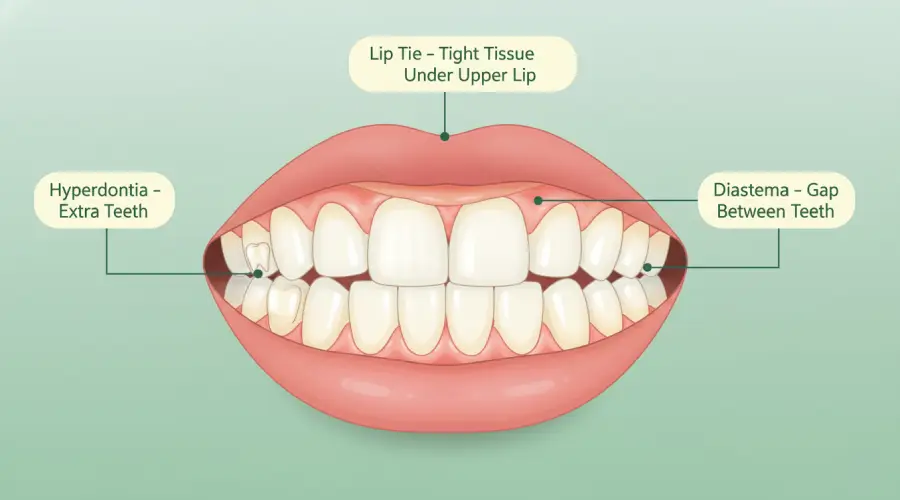
Certain dental disorders impact the soft tissues in your mouth, while others have an impact on the number or position of your teeth. Let’s look at a few common examples:
Hyperdontia (Extra Teeth)
Hyperdontia is a condition in which a person has too many teeth that don’t usually appear in the mouth. These additional teeth can develop anywhere, but are most often seen near the front teeth or by wisdom teeth. Extra teeth can create several problems. They could crowd other teeth, push them out of line or make chewing uncomfortable. Crowded teeth are also more difficult to clean, which may result in cavities or gum issues.
Excess teeth, in some cases, may bulge on nerves and also produce discomfort or pain. Extra teeth are commonly detected by dentists with X-rays, and depending on the circumstances, they may recommend simply keeping an eye on them for a while or surgically removing them to avoid additional problems. Occasionally, hyperdontia is a hereditary condition, and so children of parents with too many teeth may be examined at an earlier age.
Lip Tie
When the tissue between the upper lip and gums, known as the frenulum, is too tight or short, a potential problem arises: A lip tie. This can make the upper lip hard to move and can create various problems. Babies who are born with a lip tie might struggle to breastfeed, as they’re unable to take hold properly. $200 to $800 As babies grow, a tight lip tie can sometimes hinder their speech or make it more difficult for parents to effectively clean teeth, both of which may increase risk of cavities and gum problems.
It can also affect the appearance of the lips on smiling or how the teeth come together. If the lip tie is mild, it may not need treatment and can also resolve on its own as your child grows. A dentist or a specialized pediatric provider can perform a simple, and safe procedure, in more severe cases, to release the tissue that will prevent potential feeding, speech and dental challenges down the road.
Diastema (Gap Between Teeth)
Diastema is the presence of a space between teeth, usually refers to the gap seen between the upper central incisors. Small gaps are usually unproblematic, but larger spaces can impact the meeting of teeth when biting and have a negative effect on a person’s self-confidence. Diastema may be the result of genetics, absence of teeth or small teeth, extra tissue on the gum line; it can also develop with hand sucking. Although gaps typically pose no problem for health, they can occasionally interfere with chewing or speech.
Treatment depends on the cause and size of the gap. Options include braces or clear aligners to move teeth closer together, cosmetic dentistry procedures like bonding or veneers to fill the space, or a minor surgical procedure called a frenectomy if extra tissue is responsible. In children, diastema often closes naturally as permanent teeth grow, while adults may choose treatment for cosmetic or functional reasons.
What Are Dental Treatments & Procedures?
Dental treatments are used to help prevent some of the most common problems in your mouth, teeth and gums. Sometimes the problems are small and can be fixed with a simple procedure; others are more significant and may require surgery. These treatments are designed to help keep your mouth healthy, stop pain and prevent problems from getting worse.
Coronectomy: Safe removal of wisdom tooth crown only
There is a special procedure used that involves wisdom teeth, this called coronectomy. Rather than pulling the full tooth, your dentist extracts only the top part (the crown) and leaves the roots in place. This is useful when the roots are extremely close to nerves, since it lowers the risk of nerve injury. Coronectomy is typically advised when people have wisdom teeth that would lead to pain or other problems if they were removed completely.
It’s a safe and smart option for protecting important nerves while keeping your mouth healthy.
What Are Dental Diagnostic Tests?
Dental diagnostic tests: Special tests that help your dentist look for problems in your mouth that you can’t see just by looking in the mirror. These tests reveal what is going on inside your teeth, gums or other areas of the mouth. Doing these tests can help your dentist make the right plan to fix problems and keep your mouth healthy.
Sialogram: A Special Test for Salivary Glands
A sialogram is a imaging test that examines your salivary glands, which produce saliva in your mouth. It allows dentists to identify any blockages, infections or abnormal growth in the glands. Issues with the salivary glands may cause dry mouth, swelling or pain. The test is safe, and it gives dentists a clear sense of when they need to choose the best treatment for a patient.
A sialogram is an easy and helpful way to check the health of your salivary glands.
Dental Conditions vs Treatments vs Diagnostic Tests
Type | Example | What It Means / Purpose |
Condition | Hyperdontia | Extra teeth that grow beyond the normal number. Can crowd the mouth, misalign teeth, and sometimes cause pain. Identifying this early helps the dentist decide the best care. |
Treatment | Coronectomy | A procedure to remove only the crown of a wisdom tooth while leaving the roots intact. Helps prevent nerve damage and stops problems from getting worse. |
Diagnostic Test | Sialogram | A special imaging test that checks salivary glands for blockages, infections, or growths. Helps dentists detect hidden problems and plan the right treatment. |
Symptoms That Indicate You May Need a Dental Check-Up
Now and then, your mouth can provide clues that something’s up. You have signs like these to pay attention to and help you catch problems when they’re young, meaning they won’t be as likely to worsen.
If you see space between your teeth instead, or notice extra teeth growing, your teeth is not aligning as it should be and that may need to receive professional treatment.
When your teeth or mouth are improperly positioned, you may experience problems with speaking. A dentost can everify if there is something that’s causing you to be unable to talk properly.
Jaw pain or a feeling of discomfort while chewing is also an early warning. It could be due to dental problems, misalignment or other issues in the mouth.
Difficulty swallowing or the sensation that food is “sticking” can indicate issues with your teeth, gums or even your salivary glands.
Dry mouth can make it harder to eat, swallow, or clean your teeth properly. Learn more about dry mouth causes and solutions. It may also increase the risk of cavities and infections.
Inflamed gums are typically a result of irritation, infection or mild gum disease. Gums should feel firm and be pink, not puffy or red.
By noticing these signs you need a dental checkup early and visiting your dentist, you can prevent bigger problems and keep your smile healthy and strong.
When Should You Visit a Dentist Immediately?
Some dental issues require immediate attention. If you identify with any of these, give your dental professional a visit as soon as possible.
Wisdom tooth pain That pain you’re feeling near your wisdom teeth could mean that your teeth are coming in at the wrong angle or getting an infection. A frown can make it hurt more.
If it hurts to move your mouth, or to open it wide, you have a serious jaw or dental health issue you’ll need care for asap.
Unusual tooth eruption, like teeth coming in where they shouldn’t or in the wrong position, can cause crowding, pain, or misalignment.
Facial swelling around the mouth or jaw can be a sign of infection, which should not be ignored.
Persistent dry mouth can increase the risk of cavities, gum problems, and infections, so it’s important to get it checked quickly.
Visiting a dentist immediately when you notice these warning signs can prevent bigger problems and keep your mouth healthy.
How These Dental Problems Are Diagnosed
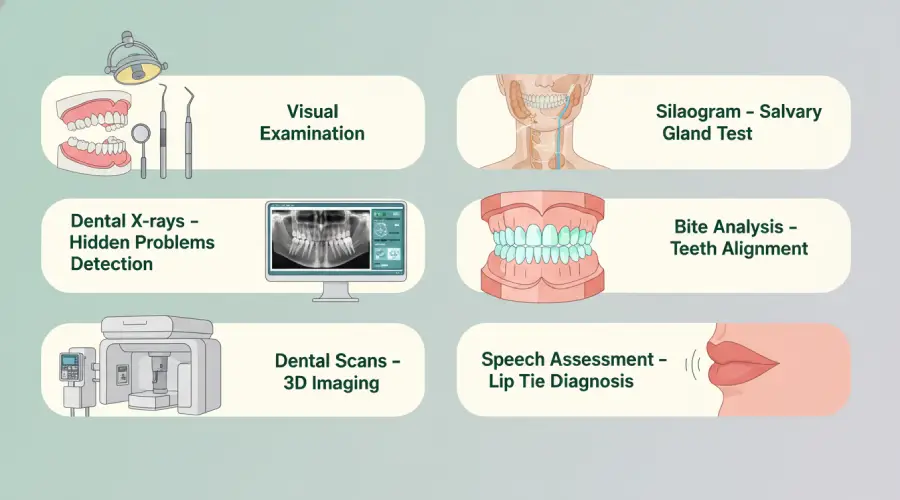
Dentists use different methods to find out what is happening in your mouth. First, they perform a visual examination, looking closely at your teeth, gums, and mouth to spot any obvious problems. X-rays are often used next to reveal hidden teeth, cavities, or issues with the jawbone that cannot be seen with the naked eye.
For a more detailed look, dental scans provide 3D images, helping the dentist understand the exact position of teeth and bones. In some cases, a sialogram is done to check the function of the salivary glands and find blockages or infections.
Dentists may also perform a bite analysis to see how your teeth come together, which helps in planning treatments like braces or other dental corrections. For conditions like a lip tie, a speech assessment is important to check if the condition affects talking or pronunciation.
Using these tools together, dentists can make an accurate diagnosis and create the best treatment plan to keep your mouth healthy.
Are These Dental Conditions Dangerous?
Not all dental conditions are harmful, but some can cause serious problems if left untreated. For example, certain conditions can affect your speech, making it harder to talk clearly.
Dental problems can also lead to infections in your teeth, gums, or jaw, which may become painful and harder to treat over time. Some conditions can change the appearance of your face or smile, affecting confidence and self-esteem.
Other issues may cause chewing difficulties, making it uncomfortable to eat or enjoy certain foods. Learn about gum disease warning signs and treatment to prevent complications. In rare cases, untreated problems can even affect nerves in your mouth, causing nerve damage.
By visiting a dentist regularly and treating problems early, you can prevent these complications and keep your mouth healthy and strong.
Treatment Options at a Glance
There are different ways dentists treat dental problems, depending on how serious they are. Sometimes, monitoring is enough for minor conditions. Dentists may simply keep an eye on the teeth or gums to make sure the problem doesn’t get worse.
For teeth that are misaligned or have gaps, braces or orthodontic treatments can help move them into the correct position, improving both function and appearance.
Some problems require surgery, such as a coronectomy to remove part of a wisdom tooth or a lip tie release to correct tight tissue. These procedures are usually safe and help prevent bigger issues later.
Laser treatments are another option, especially for soft tissue problems, as they can be precise and cause less discomfort.
Finally, minor oral procedures may be used for small growths, extra teeth, or other small issues in the mouth. Together, these treatment options allow dentists to address a wide range of dental conditions and keep your smile healthy.
Conclusion
Taking care of your teeth, gums, and mouth is more than just brushing and flossing. Understanding common dental conditions like hyperdontia, lip tie, and diastema, knowing the treatments available such as coronectomy or braces, and being aware of diagnostic tests like a sialogram can help you make smart choices for your oral health.
Early detection and timely treatment can prevent pain, infections, misalignment, and other complications. By paying attention to warning signs, like jaw pain, swelling, difficulty chewing, or unusual tooth growth, you can visit your dentist promptly and protect your smile.
Regular dental checkups, good oral hygiene, and knowledge about dental conditions, treatments, and tests are the keys to how dental health affects overall health and maintaining a healthy, confident smile for life.
FAQs
1. Is diastema (gaps between teeth) normal?
Yes! Small gaps between teeth are very common and usually harmless. Some gaps may close naturally over time, while others can be treated with braces or dental bonding if needed.
2. Can hyperdontia (extra teeth) cause pain?
Hyperdontia may cause discomfort, crowding, or misalignment of teeth. A dentist can evaluate your condition and recommend whether monitoring or removal is necessary.
3. Can a lip tie be treated without surgery?
Some mild lip tie cases improve naturally as children grow. More severe cases may require a simple, safe procedure to release the tissue and improve lip movement.
4. Is a coronectomy safe?
Yes. A coronectomy, which removes only the crown of a wisdom tooth, is a safe procedure. It reduces the risk of nerve damage compared to removing the entire tooth.
5. Is a sialogram painful?
Most patients experience only mild discomfort. A sialogram is a safe imaging test that helps dentists check salivary glands for blockages or infections and plan effective treatment.

Dr. Alexander Heifitz (Author)
Dr. Alexander Heifitz is the founder of 65 Broadway Dental in NYC, where he combines advanced dental expertise with a patient-first approach. He specializes in cosmetic and restorative treatments such as dental implants, veneers, Invisalign, and smile makeovers, helping New Yorkers achieve both oral health and confidence.

Booking An Appointment
Looking for a reliable dentist in Downtown NYC? Whether you need a routine cleaning, urgent care, or a full smile transformation — we’ve got you covered. We accept most PPO insurance plans and offer flexible scheduling.
+1 (212) 430-3888
Call for appointment
Walk-ins Welcome / Same-Day Appointments Available

Related Blogs

Common Dental Conditions, Treatments & Diagnostic Tests Explained
Learn about common dental conditions, their causes, treatments, and diagnostic tests to keep your teeth and gums healthy with early care and expert advice.
Read More
How to Get Rid of Bad Smell: Full Guide to Mouth, Nose, Stomach & Fresh Breath
Learn how to get rid of bad smells from mouth, nose, and stomach naturally. Easy tips for fresh breath, healthy body, and a confident lifestyle.
Read More